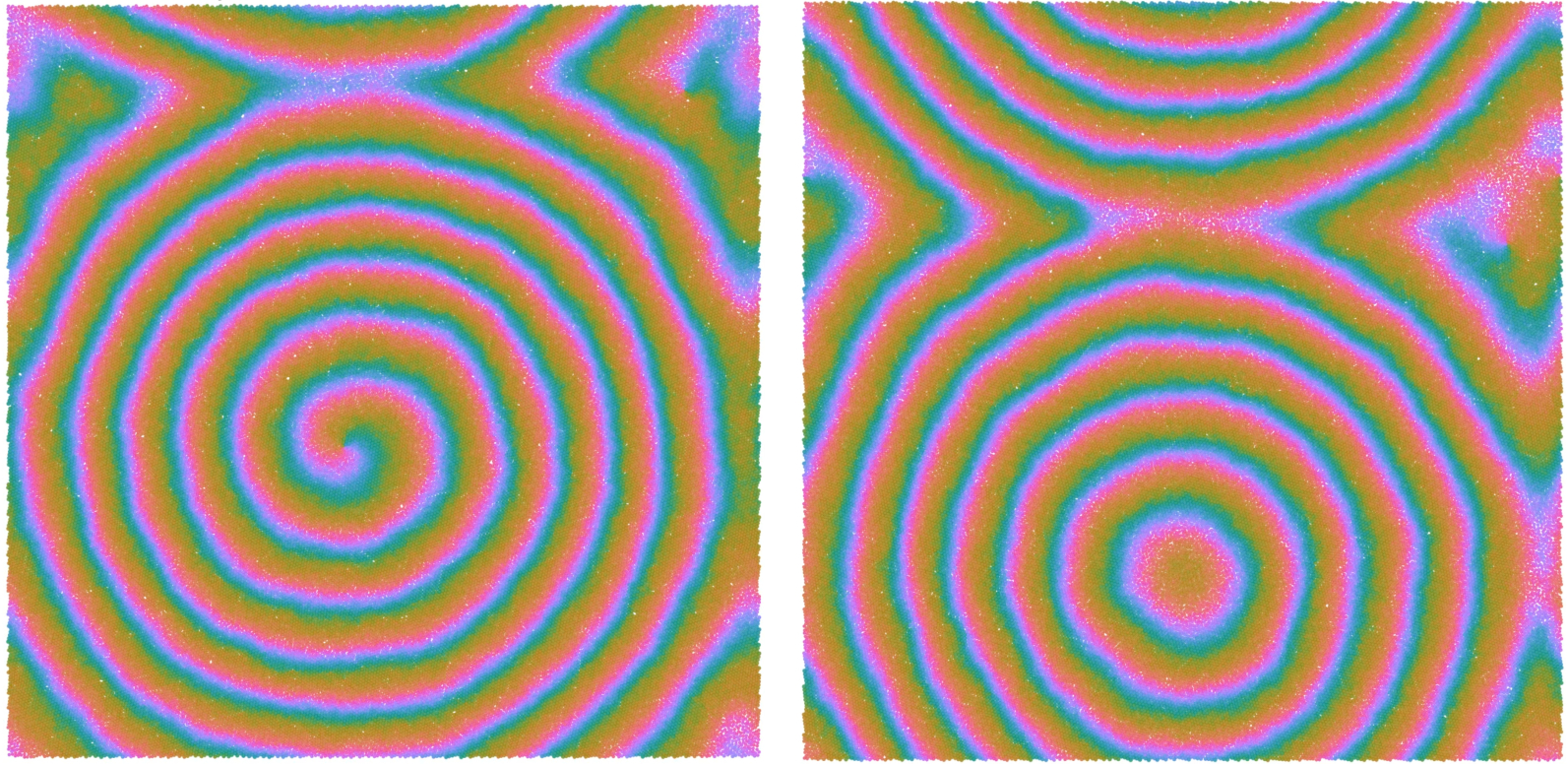
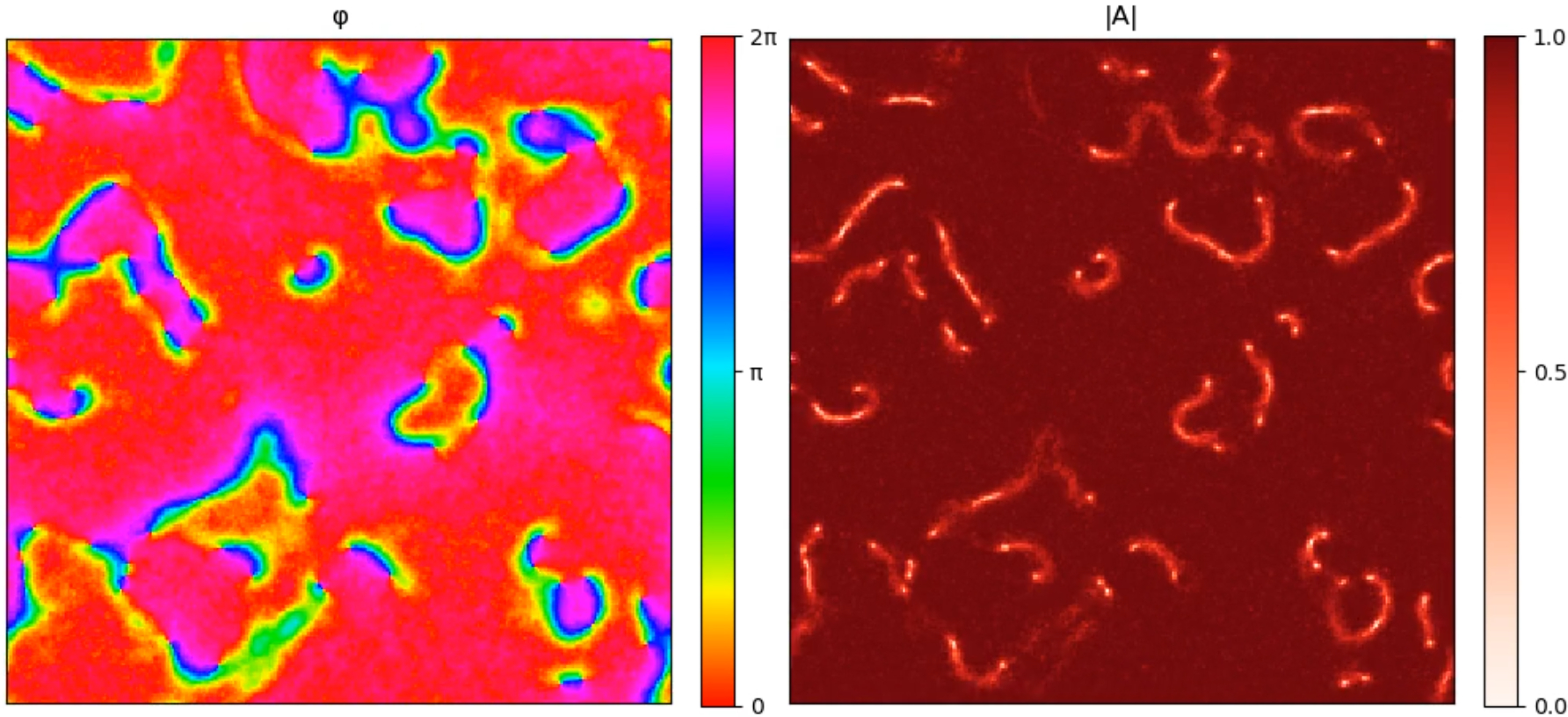
Active matter encompasses a large variety of systems, living or synthetic, where interacting components consume energy to sustain their dynamics far from equilibrium. Such systems exhibit collective effects without any equilibrium equivalent, some of which play an important role in the biological functions of living matter.
Combining methods of statistical mechanics, hydrodynamics, and control theory, we propose a versatile roadmap to predict and control the emergence of nonequilibrium complex behaviors. Specifically, we formulate and examine some minimal, yet non-trivial theoretical models which help rationalize how to regulate the dynamical patterns observed in active systems.
Selected recent publications